4 DIY Solutions for Your Bathroom Space

Luisa Hough • June 16, 2016

All of us are looking for ways to make our living spaces more efficient whilst keeping the style intact; and certainly the bathroom space is no exception. The question becomes, “How do I do this without spending a small fortune on renovations and upgrades?” The answer is simple…You get creative!

The following are four stylish bathroom hacks that will help you declutter and organize, all for the cost of a few cups of coffee (or tea, if that’s your thing!)

Creative Shelving Units

The first (and most obvious) solution for getting your bathroom clutter organized is by way of conveniently placed, ideally designed, and most definitely inexpensive shelving units. This may sound daunting, especially if you, like me, lack meaningful shelves in any and all of your bathroom spaces. But never fear! There are easy and effective ways to make this happen!

Wicker baskets (and the like)
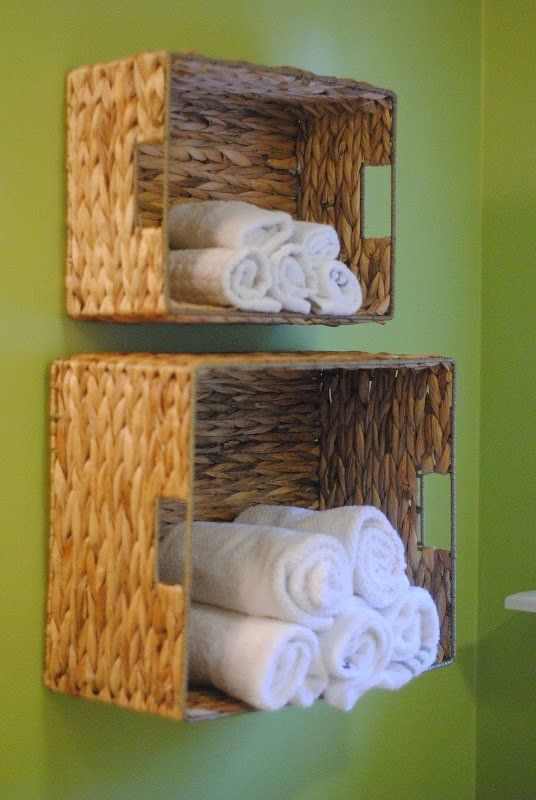
This image is from diyready.com and can be found here

Baskets (of various sizes) can be hung from any wall in your bathroom via a drywall anchor (or two) and a simple screw (or two). This technique will not only showcases a classic, rustic homestead piece (the basket); it will also give you ample room to store whatever it is that you need to store.

Obviously, if you don’t have baskets, other items can be utilized here. The key is the shape. If it’s deep enough to hold that which you need it to hold, and “the look” is there, than go for it!

The Hanging Shelf

Nothing beats the satisfaction of framing your own shelf. Now, before you get scared and run…relax. This job includes only a few tiny pieces of lumber, a small length of rope, a small can of wood stain, and a hanger (with another drywall anchor/screw combo). This piece can be easily hung over a toilet or on an empty wall. Plus, not only does it provide shelf options, you can beam with pride when you tell your guests that you fashioned it yourself, out of a tree that you found in the forest, and cut down, yourself…right? Too far?

Custom Towel Rack Solutions

Related to the shelving units, we find ideas related to hanging towels. Simply, you’d be mistaken if you stopped at the classic rack; because there’s a world of options out there for you to try out.

The Ladder Rack

An old wooden ladder, properly restored, can act as a great hanging rack for towels, face cloths and clothing items fresh out of the washer.

This image is from charmbraceletdiva.blogspot.ca  and can be found here

“His” and “Hers”

His and her towel racks are not only interesting design wise; they’re functional. No longer will your spouse have rights to your towel because he or she didn’t know that it was yours. Those days are over.

Wine Rack/Towel Rack

This image is from hubpages.com  and can be found here

Yes! The wine rack has uses for things other than wine. namely…towels! In all seriousness though, these racks can be very inexpensive and can hold several towels at a time; all the while looking classy, interesting and unique to boot! What’s not to like?

Vanity Organization

Most bathrooms that I’ve seen (and experienced) contain drawers that are simply overflowing with stuff. Avoid this travesty at all costs by dividing (and therefore conquering) the drawer’s contents. Kitchen utensil holders work fabulously here. These pieces are simple, functional, and nobody has to see them but you, so the questions surrounding kitchen organizational tools in your bathroom will be minimal.

Continue with your vanity realignment by adding some simple hanging shelves into the inside the cabinet door. A simple magazine rack can work well here, and can be attached via a couple small screws (just make sure you don’t go so far as to pierce the outer side of the door).

The Mason Jar (For all your hipster storage needs)

This image is from thediyplaybook.com  and can be found here

Mason jars are useful for lots of things: storing jams, holding pickled items and also dispensing soap…That’s right! Also (and perhaps a little more seriously), these jars can be formed into wonderful mini storage units. They look great, too!

There are obviously lots more ideas out there, but hopefully these few have gotten your creative juices flowing, and have ignited your imagination. There’s lots you can do; so what are you waiting for?

Recent Posts

By Luisa & Candice Mortgages January 14, 2026
What Is a Second Mortgage, Really? (It’s Not What Most People Think) If you’ve heard the term “second mortgage” and assumed it refers to the next mortgage you take out after your first one ends, you’re not alone. It’s a common misconception—but the reality is a bit different. A second mortgage isn’t about the order of mortgages over time. It’s actually about the number of loans secured against a single property —at the same time. So, What Exactly Is a Second Mortgage? When you first buy a home, your mortgage is registered on the property in first position . This simply means your lender has the primary legal claim to your property if you ever sell it or default. A second mortgage is another loan that’s added on top of your existing mortgage. It’s registered in second position , meaning the lender only gets paid out after the first mortgage is settled. If you sell your home, any proceeds go toward paying off the first mortgage first, then the second one, and any remaining equity is yours. It’s important to note: You still keep your original mortgage and keep making payments on it —the second mortgage is an entirely separate agreement layered on top. Why Would Anyone Take Out a Second Mortgage? There are a few good reasons homeowners choose this route: You want to tap into your home equity without refinancing your existing mortgage. Your current mortgage has great terms (like a low interest rate), and breaking it would trigger hefty penalties. You need access to funds quickly , and a second mortgage is faster and more flexible than refinancing. One common use? Debt consolidation . If you’re juggling high-interest credit card or personal loan debt, a second mortgage can help reduce your overall interest costs and improve monthly cash flow. Is a Second Mortgage Right for You? A second mortgage can be a smart solution in the right situation—but it’s not always the best move. It depends on your current mortgage terms, your equity, and your financial goals. If you’re curious about how a second mortgage could work for your situation—or if you’re considering your options to improve cash flow or access equity—let’s talk. I’d be happy to walk you through it and help you explore the right path forward. Reach out anytime—we’ll figure it out together.
By Luisa & Candice Mortgages January 7, 2026
Starting from Scratch: How to Build Credit the Smart Way If you're just beginning your personal finance journey and wondering how to build credit from the ground up, you're not alone. Many people find themselves stuck in the classic credit paradox: you need credit to build a credit history, but you can’t get credit without already having one. So, how do you break in? Let’s walk through the basics—step by step. Credit Building Isn’t Instant—Start Now First, understand this: building good credit is a marathon, not a sprint. For those planning to apply for a mortgage in the future, lenders typically want to see at least two active credit accounts (credit cards, personal loans, or lines of credit), each with a limit of $2,500 or more , and reporting positively for at least two years . If that sounds like a lot—it is. But everyone has to start somewhere, and the best time to begin is now. Step 1: Start with a Secured Credit Card When you're new to credit, traditional lenders often say “no” simply because there’s nothing in your file. That’s where a secured credit card comes in. Here’s how it works: You provide a deposit—say, $1,000—and that becomes your credit limit. Use the card for everyday purchases (groceries, phone bill, streaming services). Pay the balance off in full each month. Your activity is reported to the credit bureaus, and after a few months of on-time payments, you begin to establish a credit score. ✅ Pro tip: Before you apply, ask if the lender reports to both Equifax and TransUnion . If they don’t, your credit-building efforts won’t be reflected where it counts. Step 2: Move Toward an Unsecured Trade Line Once you’ve got a few months of solid payment history, you can apply for an unsecured credit card or a small personal loan. A car loan could also serve as a second trade line. Again, make sure the account reports to both credit bureaus, and always pay on time. At this point, your focus should be consistency and patience. Avoid maxing out your credit, and keep your utilization under 30% of your available limit. What If You Need a Mortgage Before Your Credit Is Ready? If homeownership is on the horizon but your credit history isn’t quite there yet, don’t panic. You still have a few options. One path is to apply with a co-signer —someone with strong credit and income who is willing to share the responsibility. The mortgage will be based on their credit profile, but your name will also be on the loan, helping you build a record of mortgage payments. Ideally, when the term is up and your credit has matured, you can refinance and qualify on your own. Start with a Plan—Stick to It Building credit may take a couple of years, but it all starts with a plan—and the right guidance. Whether you're figuring out your first steps or getting mortgage-ready, we’re here to help. Need advice on credit, mortgage options, or how to get started? Let’s talk.
By Luisa & Candice Mortgages December 31, 2025
Want a Better Credit Score? Here’s What Actually Works Your credit score plays a major role in your ability to qualify for a mortgage—and it directly affects the interest rates and products you’ll be offered. If your goal is to access the best mortgage options on the market, improving your credit is one of the smartest financial moves you can make. Here’s a breakdown of what truly matters—and what you can start doing today to build and maintain a strong credit profile. 1. Always Pay On Time Late payments are the fastest way to damage your credit score—and on-time payments are the most powerful way to boost it. When you borrow money, whether it’s a credit card, car loan, or mortgage, you agree to repay it on a schedule. If you stick to that agreement, lenders reward you with good credit. But if you fall behind, missed payments are reported to credit bureaus and your score takes a hit. A single missed payment over 30 days late can hurt your score. Missed payments beyond 120 days may go to collections—and collections stay on your report for up to six years . Quick tip: Lenders typically report missed payments only if they’re more than 30 days overdue. So if you miss a Friday payment and make it up on Monday, you're probably in the clear—but don't make it a habit. 2. Avoid Taking On Unnecessary Credit Once you have at least two active credit accounts (like a credit card and a car loan), it’s best to pause on applying for more—unless you truly need it. Every time a lender checks your credit, a “hard inquiry” appears on your report. Too many inquiries in a short time can bring your score down slightly. Better idea? If your current lender offers a credit limit increase , take it. Higher available credit (when used responsibly) actually improves your credit utilization ratio, which we’ll get into next. 3. Keep Credit Usage Low How much of your available credit you actually use—also known as credit utilization —is another major factor in your score. Here’s the sweet spot: Aim to use 15–25% of your limit if possible. Never exceed 60% , especially if you plan to apply for a mortgage soon. So, if your credit card limit is $5,000, try to keep your balance under $1,250—and pay it off in full each month. Maxing out your cards or carrying high balances (even if you make the minimum payment) can tank your score. 4. Monitor Your Credit Report About 1 in 5 credit reports contain errors. That’s not a small number—and even a minor mistake could cost you when it’s time to get approved for a mortgage. Check your report at least once a year (or sign up for a monitoring service). Look for: Incorrect balances Accounts you don’t recognize Missed payments you know were paid You can request reports directly from Equifax and TransUnion , Canada’s two national credit bureaus. If something looks off, dispute it right away. 5. Deal with Collections Fast If you spot an account in collections—don’t ignore it. Even small unpaid bills (a leftover phone bill, a missed utility payment) can drag down your score for years. Reach out to the creditor or collection agency and arrange payment as quickly as possible . Once settled, ask for written confirmation and ensure it’s updated on your credit report. 6. Use Your Credit—Don’t Just Hold It Credit cards won’t help your score if you’re not using them. Inactive cards may not report consistently to the credit bureaus—or worse, may be closed due to inactivity. Use your cards at least once every three months. Many people put routine expenses like groceries or gas on their cards and pay them off right away. It’s a simple way to show regular, responsible use. In Summary: Improving your credit score isn’t complicated, but it does take consistency: Pay everything on time Keep balances low Limit new credit applications Monitor your report and handle issues quickly Use your credit regularly Following these principles will steadily increase your creditworthiness—and bring you closer to qualifying for the best mortgage rates available. Ready to review your credit in more detail or start prepping for a mortgage? I’m here to help—reach out anytime!

Luisa & Candice Mortgages 

Contact Me Anytime!

The best way to get ahold of me is to submit through the contact form below. However feel free to give me a shout on the phone as well.

Contact Us